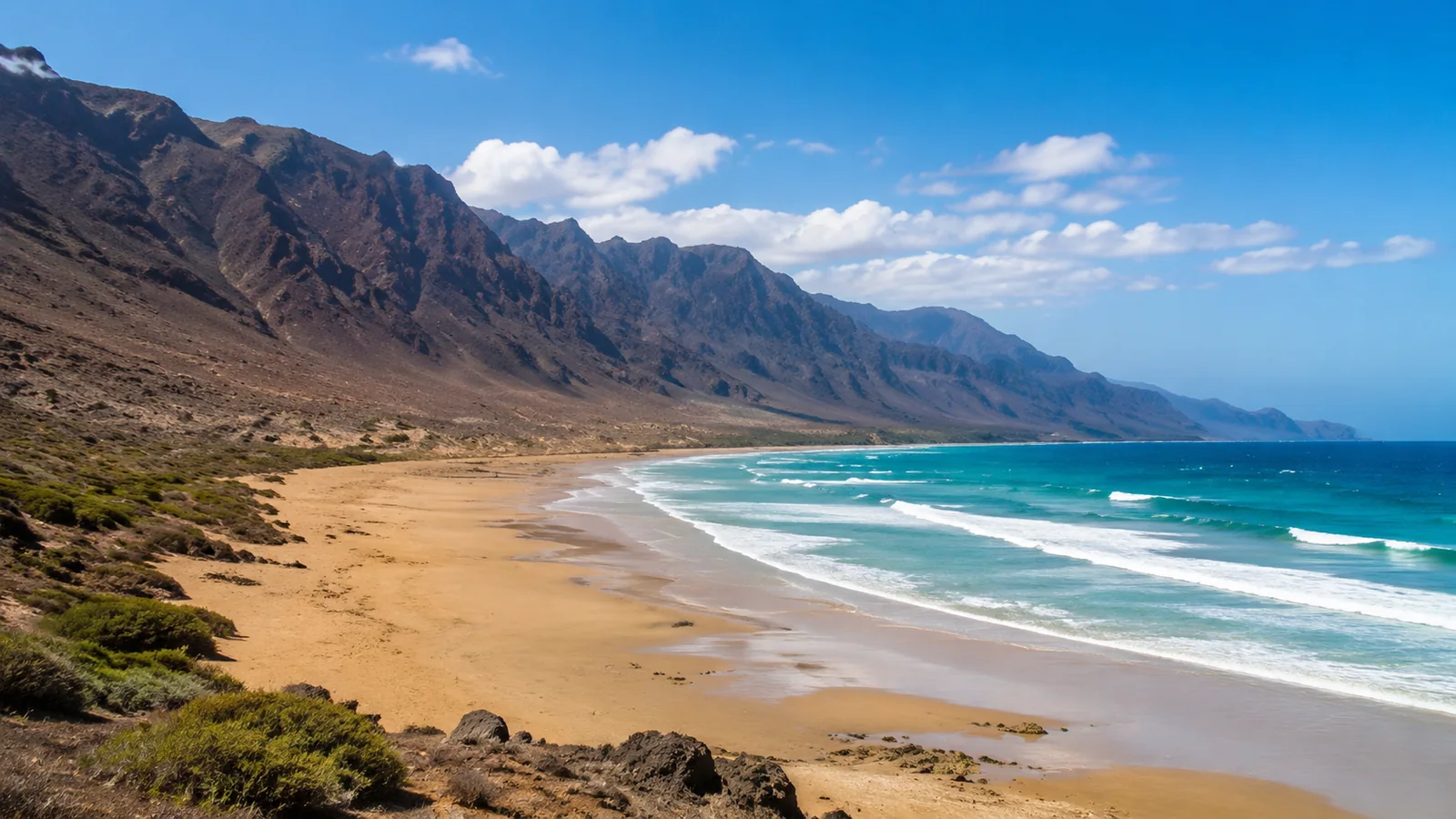
Playa de Famara shows many visitors a different side of Lanzarote. Instead of a sheltered resort bay, it offers golden sand, Atlantic waves and the immense Risco de Famara cliffs. It is a place for long walks, surf lessons, changing light and open ocean horizons.
Famara is not only a beach; it is a landscape. The small village of Caleta de Famara sits at the southern end of the bay, while the beach stretches north below the cliffs towards La Caleta and the surrounding protected area. The scenery is dramatic in every season. On a clear day, the sand glows honey-coloured and the water is a bright blue-green. When trade winds bring cloud against the escarpment, the whole coast feels moody, wild and cinematic.
Why Playa de Famara is so special
The first thing to understand is scale. Famara is far longer and less enclosed than the better-known resort beaches in Lanzarote. That gives it a generous, free feeling, but it also means that wind and tide matter. The beach is ideal for a walk, for watching surfers or for lying in the sun when conditions are calm. It is not always the best place for an effortless swim, especially if there are strong waves or currents. Respecting the sea is part of enjoying Famara properly.
The Risco de Famara is the defining backdrop. These cliffs run along the north-western edge of the island and rise sharply above the beach, creating a powerful wall of dark rock. Their presence makes Famara feel different from a typical holiday coast. As the day progresses, sunlight moves across the cliffs and changes their colour from brown and charcoal to warm gold. Even visitors who are not interested in surfing often end up staying longer than planned simply to watch the light and the waves.
The village: Caleta de Famara
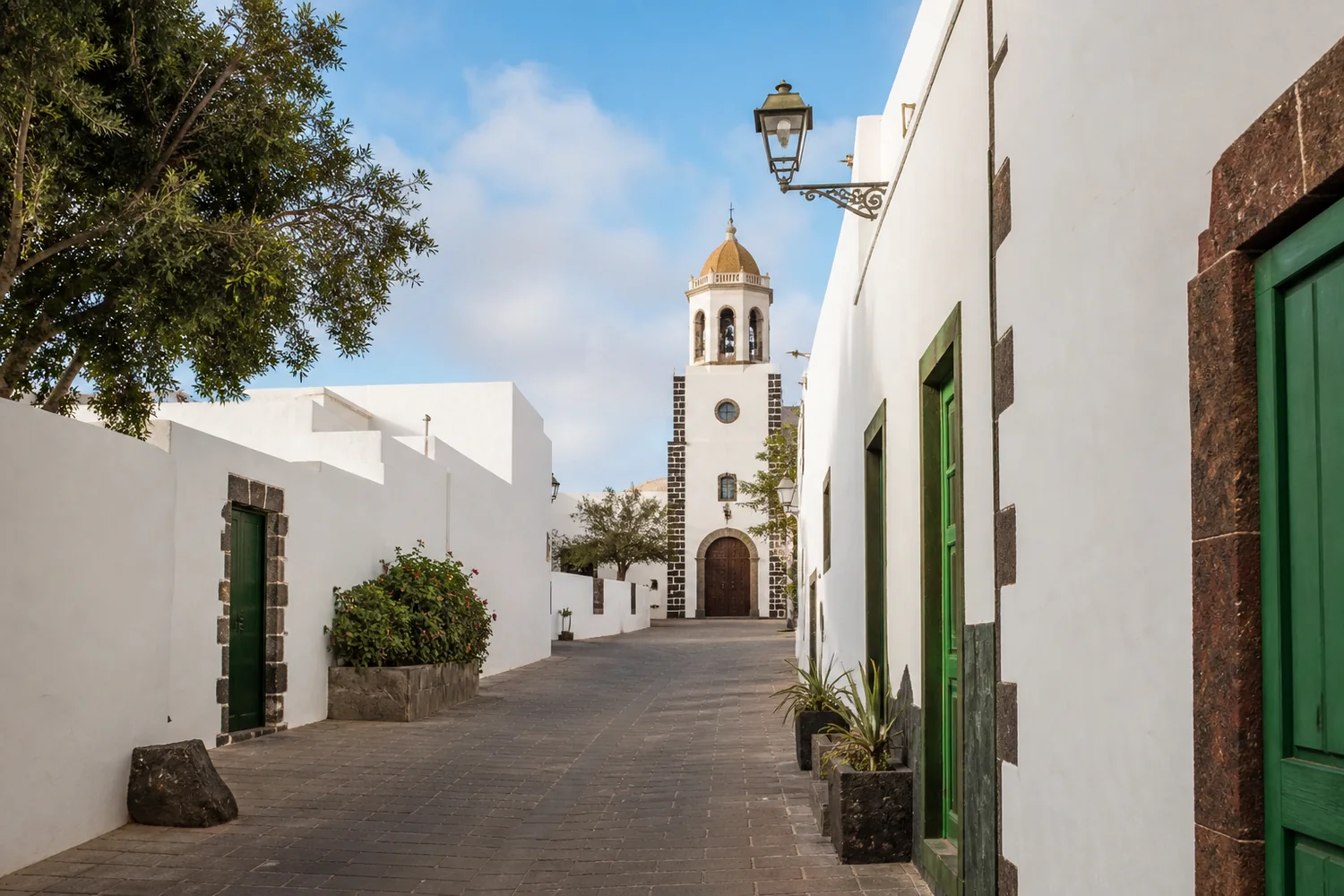
Caleta de Famara is a relaxed village of low houses, sandy lanes, cafés, surf schools and casual restaurants. It has an easygoing character that suits the beach: barefoot visitors, boards leaning against walls and people lingering over breakfast after an early session. It is much less formal than a resort centre, but it has the essentials you need for a beach day, including places to eat, small shops and surf-rental options.
Take a slow walk through the village before or after the beach. The streets nearest the sand have a simple, local feel, and the views towards the cliffs are impressive even from a café table. For lunch, look for Canarian dishes, fresh fish or something straightforward after time in the water. In busy periods, the most popular restaurants can fill up, so arriving a little earlier than standard Spanish lunch time can make the experience more relaxed.
How to get to Famara
Famara is on the north-west coast of Lanzarote, in the municipality of Teguise. A rental car is the most convenient way to arrive, although buses and organised activities may also be available from main resorts. Use Google Maps for Playa de Famara and follow signs for Caleta de Famara. The drive is scenic and easy, with the cliffs appearing dramatically as you approach the coast.
There is parking in and around the village, plus access points closer to the beach. Spaces become limited on weekends, school holidays and good surf days, so an earlier arrival helps. Park considerately and avoid blocking narrow sandy lanes or residents’ access. If you are carrying a board or lots of beach equipment, choose a practical spot and be prepared for a short walk across sand.
Swimming safely at Famara
Famara can look inviting and still have powerful currents. The Atlantic swell, shifting sandbanks and wind create conditions that are very different from calm, sheltered beaches. Swim only when the sea is clearly suitable, follow flags and local advice, and stay close to shore. If you are uncertain, do not enter; a beach walk or a surf lesson with qualified instructors is a much better alternative. Children need close, continuous supervision near the water.
Never assume that a calm-looking stretch is safe just because other people are in the sea. Conditions can change quickly, and rip currents can be difficult to spot. Avoid swimming alone, especially outside busy areas, and never turn a short dip into a long-distance swim. If you do get caught in a current, try to stay calm, avoid fighting directly against it and attract attention while moving parallel to the shore if you are able. Prevention is simpler: choose the safest part of the beach and ask a local surf school when in doubt.
Surfing, bodyboarding and lessons
Famara is Lanzarote’s best-known surf beach and a very good place to try a lesson. Several established surf schools in the village offer sessions for beginners, including board and wetsuit hire. Booking in advance is sensible in high season, but choose a school that groups people by ability, gives safety guidance and adapts its plans to the conditions. A good first lesson is not about standing up immediately; it is about learning where to position yourself, how to handle the board and how to read the water with confidence.
Experienced surfers will appreciate Famara’s variety, but should still be cautious and respectful of other users. Keep clear of learners’ zones, do not paddle out beyond your ability and check the forecast before committing to a session. Bodyboarding is another fun option on smaller days, while a simple walk along the tideline is perfect when the wind is too strong for anything else. The beach has room for many kinds of visitors when everyone gives each other space.
Walking the beach and enjoying the views
A long beach walk is one of Famara’s finest experiences. Set off from the village and head north with the cliffs on one side and the ocean on the other. At low tide, the sand seems to go on forever; at higher tide, stay aware of how much space remains below the cliff line. Do not walk close beneath unstable slopes, and avoid crossing protected dunes or vegetation. The objective is not to reach a particular point but to enjoy the changing patterns in the sand, water and rock.
For a broader view, consider driving inland later to a northern viewpoint, such as El Bosquecillo or the road towards Mirador del Río. Famara bay from above explains its scale immediately. Stick to established routes, take water and avoid unfamiliar paths in high wind.
Best time to visit Famara
Morning is an excellent time for a quiet beach walk, a beginner surf lesson or a coffee in the village before it gets busy. Later in the day, the warm light on the Risco de Famara is beautiful, and sunset can be spectacular when the sky is clear. The beach faces west, so it is a natural place to finish a day, though you should plan transport and warm clothing if you stay until after sunset.
Wind is the main factor throughout the year. Lanzarote’s breeze is part of its charm, but Famara can be much windier than sheltered east-coast resorts. Check the forecast on the morning of your visit, bring a light windproof layer and be ready to switch plans. If the beach is too gusty for sunbathing, enjoy lunch in the village, watch the surfers or continue to another nearby attraction. Flexibility is the key to a great Famara day.
What to take and practical tips
Bring water, high-factor sunscreen, a hat that will not blow away, sunglasses and a light extra layer. Sand can travel in the wind, so a bag that closes properly is useful for phones and cameras. A picnic works well, but take everything back with you and avoid leaving food waste behind. If you plan to surf, confirm whether your school provides a wetsuit and what you should bring yourself.
There is no entry fee for Playa de Famara, and it is a wonderful value-for-money day out. The best approach is to keep expectations simple: come for the landscape, accept the weather that arrives and make water activities conditional on safety. Famara does not need to be calm to be beautiful.
Combine Famara with a northern island route
Famara can be the centrepiece of a northern Lanzarote day. Pair it with the old town of Teguise, the Jardín de Cactus, Haría or the Mirador del Río, depending on your route. If you are staying in Costa Teguise, it is an easy and rewarding contrast to the resort coastline. If you are based in Playa Blanca, allow the better part of a day so you are not rushing back.
More than anything, Famara offers space. Walk a little beyond the village, look up at the cliffs and listen to the rhythm of the Atlantic. Whether you surf, stroll, photograph or simply sit with a coffee after the beach, Playa de Famara gives you a generous, authentic and deeply memorable version of Lanzarote.