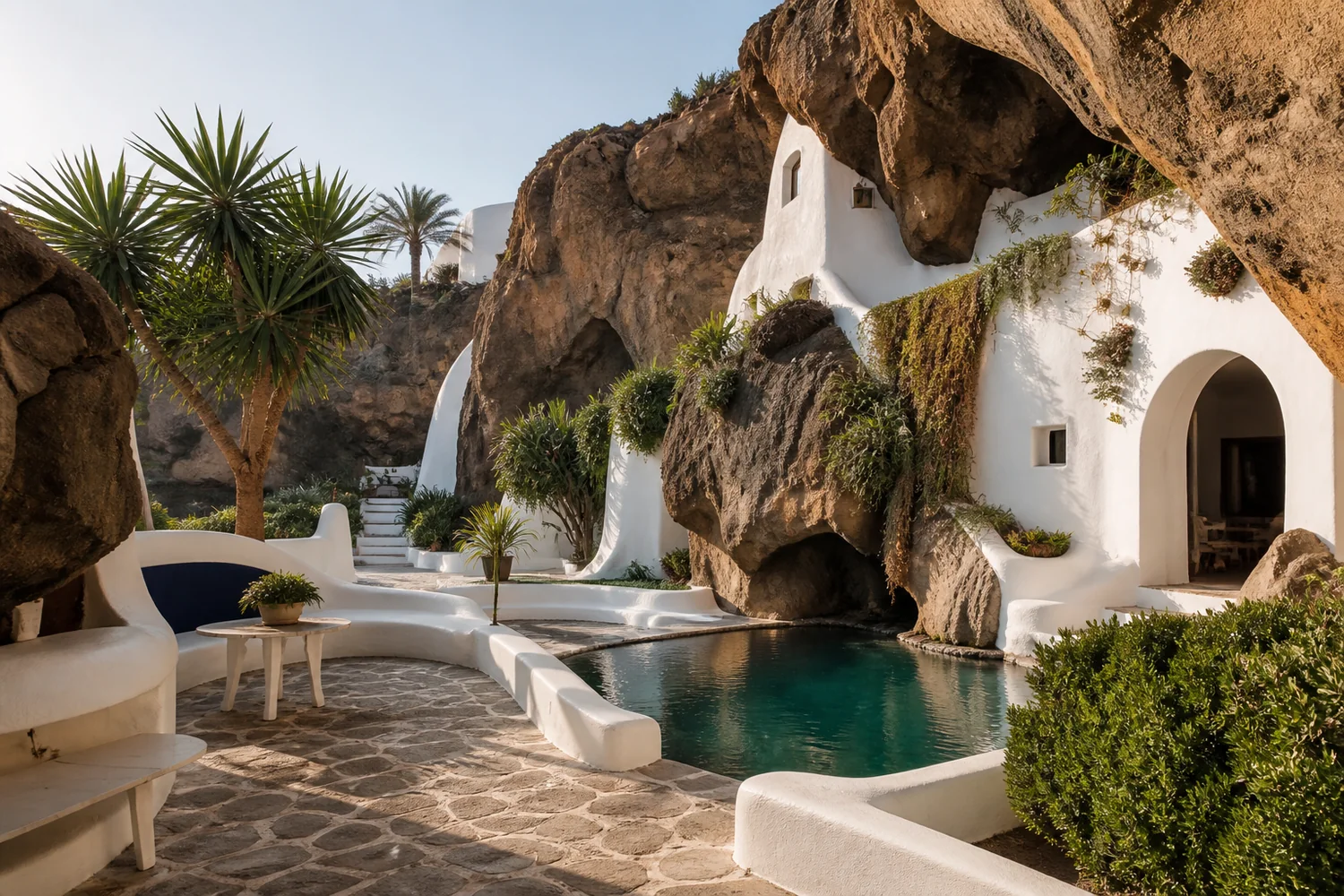
The Fundación César Manrique in Tahíche is one of the essential visits for understanding Lanzarote. It is much more than a museum: it is the former home of the artist César Manrique, built within a sea of black lava and designed as a conversation between architecture, art, plants and the island’s volcanic geology. Rooms open onto terraces, white walls meet dark basalt and a sequence of natural lava bubbles becomes a series of intimate living spaces. Even visitors who know little about modern art usually leave with a clearer sense of why Lanzarote looks and feels the way it does.
The visit is relaxed, visual and accessible. You do not need specialist knowledge to enjoy it. Simply move slowly, look carefully and notice how the house frames the landscape. Every courtyard, window and path offers a different relationship with the lava. It is a particularly rewarding stop early in a holiday, because it helps you understand the design language that appears elsewhere on the island: low-rise buildings, whitewashed forms, native plants and respect for the volcanic terrain.
Who was César Manrique?
César Manrique was a Lanzarote-born artist, architect and cultural figure whose influence is visible across the island. After studying and working beyond Lanzarote, including a period in New York, he returned in the 1960s with a strong belief that tourism, art and environmental care could coexist. He helped shape a model of development that protected the island’s character instead of covering it with tall buildings and uncontrolled signage.
His work was not about separating art from daily life. Manrique saw beauty in traditional architecture, volcanic stone, wind, light and simple local materials. Many of Lanzarote’s best-known visitor spaces, including Jameos del Agua and the Mirador del Río, carry his unmistakable approach. The foundation in Tahíche is especially personal because it was his own home for two decades. Visiting it is like walking through a three-dimensional expression of his ideas.
A house built into lava
The home was created on lava left by the great eruptions of 1730–1736. Rather than clear the terrain, Manrique used it as the starting point. The upper level draws on traditional Lanzarote architecture: white forms, clean lines, spacious rooms and carefully controlled natural light. Below, the house reaches into five natural volcanic bubbles connected by tunnels and passages. These cavities were transformed into living areas, a pool zone, entertaining spaces and secluded corners full of plants and stone.
This lower level is the heart of the experience. It shows how an apparently harsh volcanic landscape can become comfortable and inviting without losing its identity. Basalt walls remain visible, vegetation softens the spaces and splashes of colour appear at just the right moments. The famous pool, winding walkways and sculptural details are wonderfully photogenic, but the best way to appreciate them is to put the camera down occasionally and see how the route unfolds.
What you will see during the visit
Allow yourself to explore the house at an unhurried pace. The upstairs rooms include exhibition spaces and reveal how Manrique combined modern ideas with local forms. Notice the large windows and the way light reaches into the interiors. The views are never accidental: a frame might direct your eye to a palm, a rough lava field or a carefully placed artwork. The house feels open and airy even though it is rooted in solid volcanic rock.
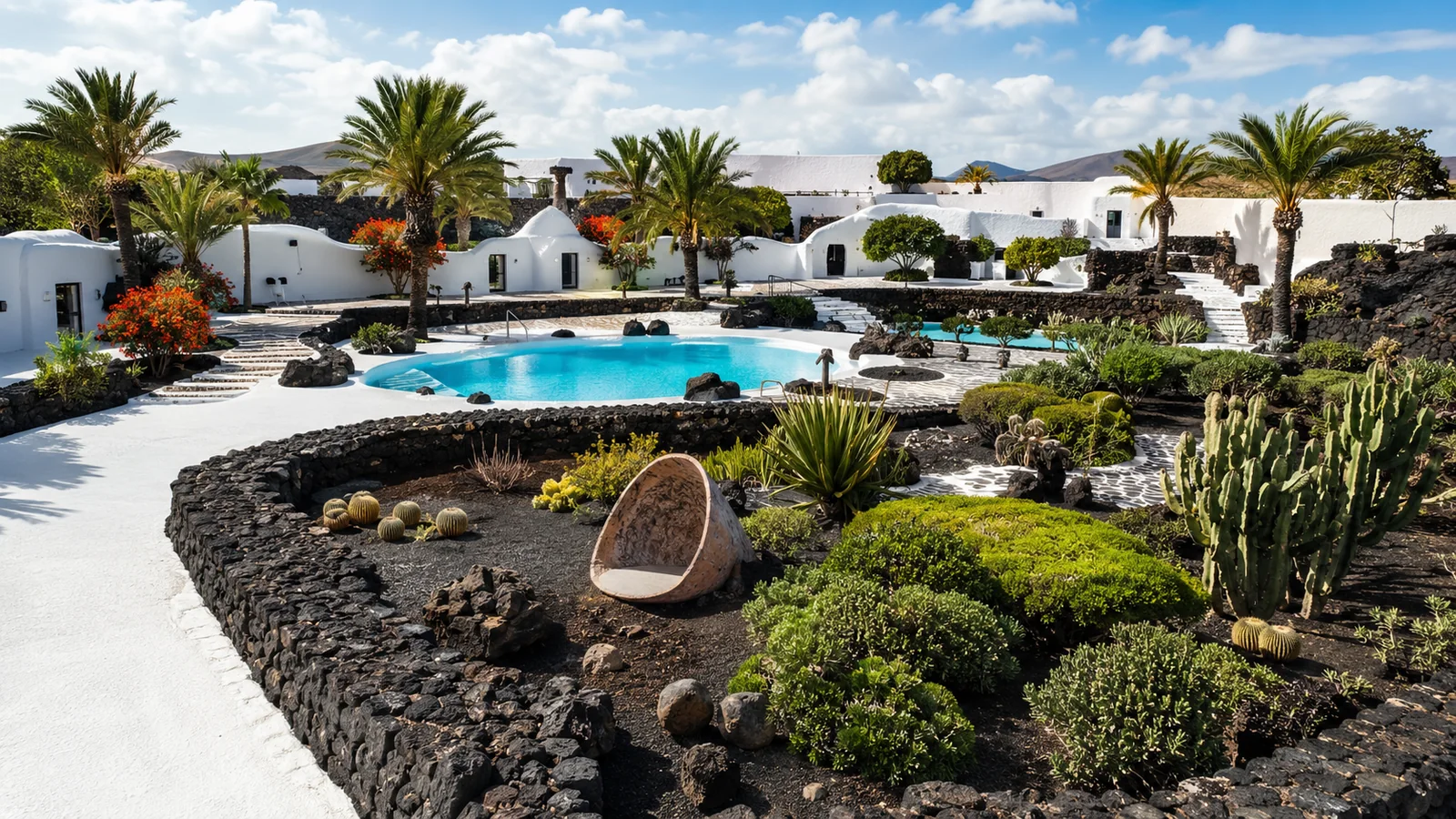
In the underground areas, the experience becomes more playful. Natural chambers have different personalities: one feels cool and quiet, another opens unexpectedly onto water, while another combines curved lava walls with white surfaces and greenery. The former studio, used as an exhibition space, provides a final opportunity to see art in context. The gardens outside continue the same dialogue, contrasting black lava, volcanic ash, low wind-protection walls and hardy plants.
The foundation also presents works from its collection and temporary exhibitions, so the exact displays can change. Read the short labels where they are available, but do not feel you must study everything. This is a visit that works through atmosphere as much as information. Families, design lovers and first-time visitors to Lanzarote can all enjoy it in different ways.
How to get to the Fundación César Manrique
The foundation is in Tahíche, in the central-east of Lanzarote, making it easy to reach from Costa Teguise, Arrecife, Puerto del Carmen and the inland villages. A rental car is the simplest option. Use Google Maps for Fundación César Manrique and follow directions to Calle Jorge Luis Borges in Tahíche. Parking is available close to the entrance, although arriving earlier in the day gives you a calmer start in busy weeks.
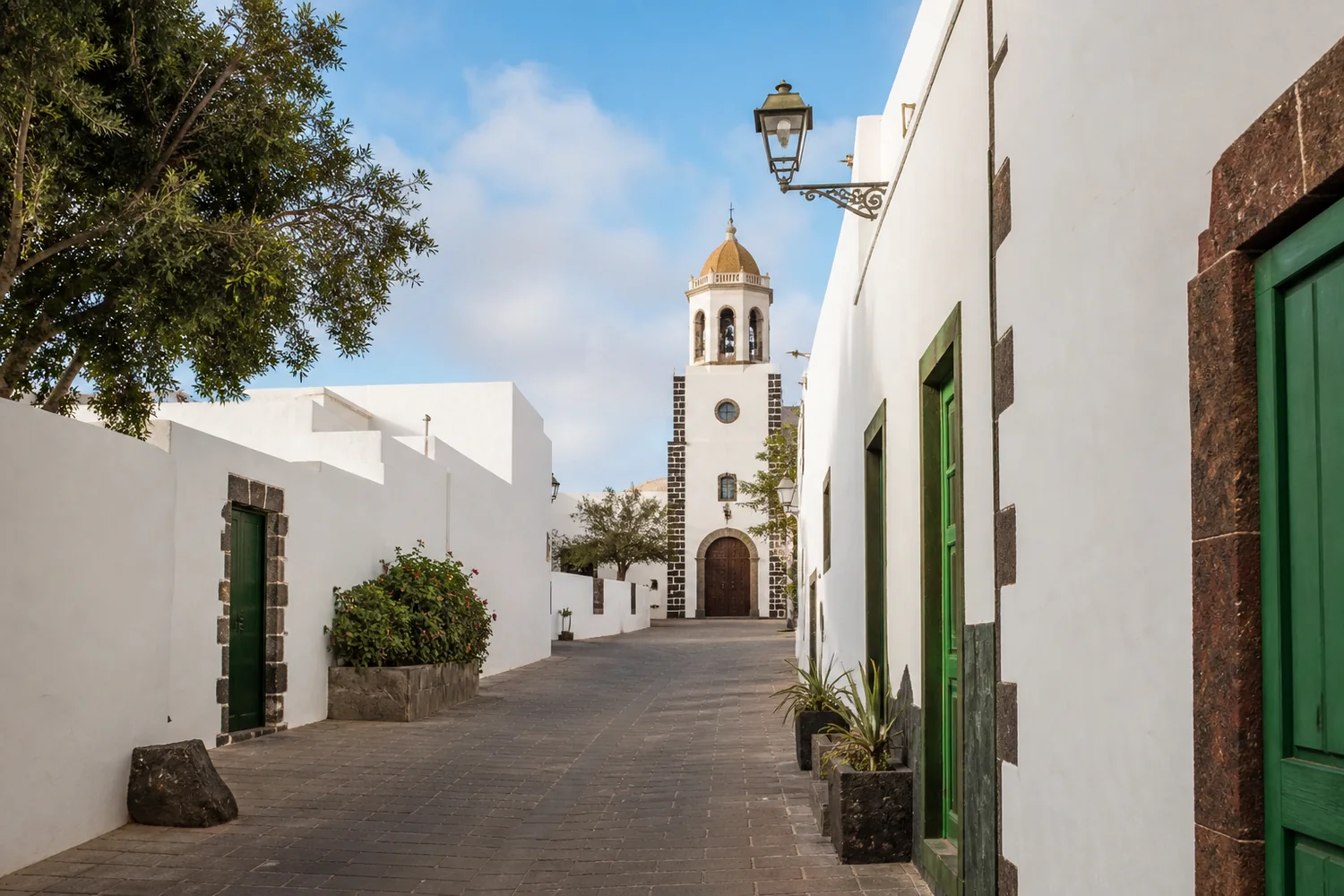
Public transport and organised island tours may also include Tahíche, but check the route and return times carefully. The foundation is easy to combine with the Jardín de Cactus, the old town of Teguise, La Geria or Costa Teguise. If you are coming from the south, it makes an excellent cultural stop between a beach morning and an inland afternoon. The building itself is not far from the main roads, so there is no difficult final approach.
Tickets, opening times and planning ahead
The Fundación César Manrique publishes its current visitor information on its official website. At the time of writing, the Tahíche site is open daily, including public holidays, from 10:00 to 17:30; ticket sales close at 17:00, and it closes on 1 January. The standard ticket is listed at €10, with reduced child and combined-ticket options available. As prices, exhibitions and opening arrangements can change, always check the official Fundación César Manrique visitor page before travelling.
For most independent visitors, one to one and a half hours is enough, although art and architecture enthusiasts may enjoy two hours. If you are visiting in a group or at a particularly busy time, check whether advance arrangements are recommended. The important thing is not to arrive just before the final ticket-sale time; the route deserves breathing space, and the late-afternoon light is lovely when you are not rushing through the rooms.
Best time to visit and photography etiquette
Mornings tend to be quieter and are a good choice if you want to photograph the spaces with fewer people. Later in the day, the strong Lanzarote sunlight creates striking shadows across the white walls and lava. Either works well, but avoid treating the house as a photo set. Keep walkways clear, follow signs about photography and never step onto planted areas or climb on lava features for an image.
A phone camera is usually enough. Look for the small details: a bright door against basalt, a reflection in the pool, a palm above a dark volcanic wall. Wide shots are tempting, but the quieter compositions often capture Manrique’s vision better. If you are travelling with children, invite them to look for the different lava bubbles or colour accents; it turns the visit into a gentle visual treasure hunt without disrupting other guests.
What to bring and accessibility considerations
Wear comfortable shoes with a good grip. The site is not a strenuous walk, but there are steps, uneven surfaces and changes in level around the volcanic spaces. Bring water, sun protection and a light layer for air-conditioned or shaded interiors. Large bags are unnecessary, and keeping your hands free makes stairs and narrow areas easier to manage.
Visitors with limited mobility should review the current accessibility information directly with the foundation before their visit, because the historic, multi-level design naturally includes constraints. The team can provide the most reliable advice for an individual situation. The atmosphere is generally calm and family-friendly, but young children should be supervised around water features and steps.
Combine the foundation with the rest of Lanzarote
Pair the foundation with the Jardín de Cactus for another powerful example of Manrique’s ability to turn a difficult landscape into an elegant public space. A visit to Jameos del Agua or Mirador del Río later in your holiday will make even more sense once you have seen his home. For a different contrast, continue into La Geria to see vineyards grown in volcanic ash, or head towards Teguise for traditional architecture and cafés.
The Fundación César Manrique is a place to visit slowly and with curiosity. It explains how Lanzarote can feel so coherent despite its dramatic, varied landscapes. You will see lava and whitewash, art and daily life, nature and design working together without competition. That gentle balance is the lasting lesson of the house, and it is why this cultural stop belongs on almost every Lanzarote itinerary.