Villa de Teguise, often simply called Teguise, is one of the most rewarding places to slow down in Lanzarote. Set inland beneath the old Castillo de Santa Bárbara, this whitewashed historic town feels very different from the island’s beach resorts. Narrow streets, small squares, wooden balconies, churches and elegant old houses tell the story of a place that was once Lanzarote’s capital. Visit on a quiet weekday and it feels calm and intimate; come on Sunday and the streets fill with one of the Canary Islands’ best-known markets.
Teguise is easy to include in almost any itinerary, but it deserves more than a quick walk around the main square. Give yourself time for coffee, a museum, a browse through local shops and a few detours down side streets. The town’s charm is not about a single headline attraction. It comes from the atmosphere of an old administrative and trading centre that has kept much of its character while welcoming modern visitors.
Lanzarote’s historic capital
Villa de Teguise was founded in the early fifteenth century and became the island’s principal civil and urban settlement. For centuries it was Lanzarote’s capital, a role it held until 1852, when Arrecife gradually took over as the main administrative centre. The inland location offered more protection than a coastal town, although Teguise still faced periods of danger from pirate raids and attacks during its long history.
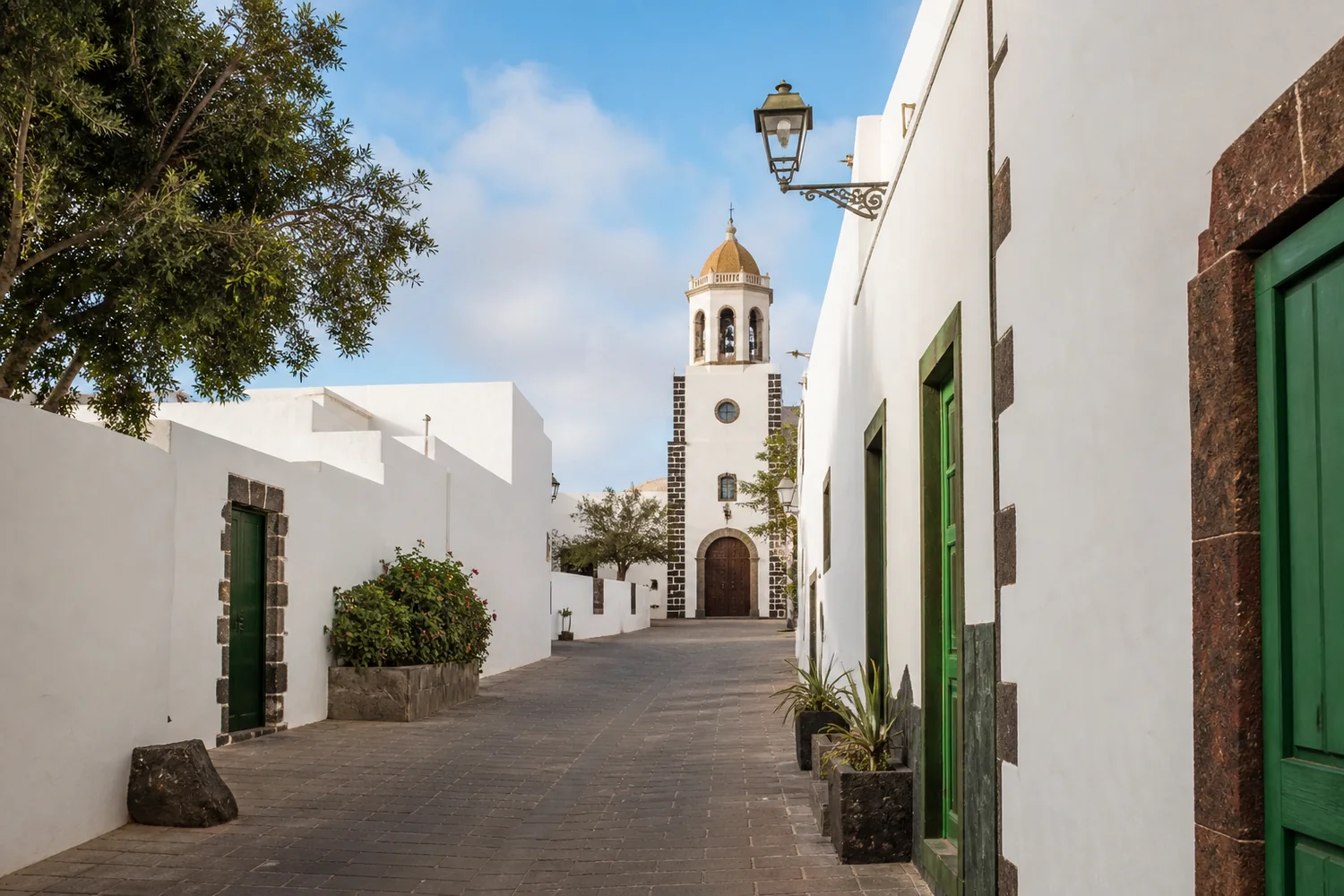
Walking through the historic centre, look for the clues to that importance: substantial houses, religious buildings, civic spaces and streets that feel more formal than the small fishing villages elsewhere on the island. The town has been carefully shaped by traditional Canarian architecture, with white façades, dark stone details and occasional green-painted woodwork. It is easy to see why Teguise is a favourite for visitors who want to understand Lanzarote beyond its volcanic beaches.
What to see in the old town
Start around Plaza de la Constitución, also known as Plaza de San Miguel, where cafés, palms and historic buildings make a natural first stop. The Church of Nuestra Señora de Guadalupe is one of the town’s key landmarks and helps anchor the surrounding lanes. From there, wander without a rigid plan. Teguise is compact, and some of the nicest moments come from noticing a doorway, a small chapel or a quiet patio rather than following a strict route.
Palacio Spínola is another important building in the centre. It is associated with the Casa-Museo del Timple, a space dedicated to the small string instrument that is central to Canarian musical tradition. If it is open during your visit, it is a lovely cultural stop and a good way to understand a distinctly local sound. Programmes and opening arrangements can vary, so check the current information before building it into a tight schedule.
Above the town, Castillo de Santa Bárbara stands on the crater-like volcanic hill of Guanapay. The fortress is closely linked to the island’s defensive history and is often associated with the Museum of Piracy. The panoramic view from the area is excellent, stretching across Teguise and much of Lanzarote. Access, exhibitions and opening times may change, so confirm current details locally before making a special journey up to the castle.
The Teguise Sunday Market
Every Sunday morning, Teguise changes character completely. The historic streets host the Teguise Market, with more than 400 stalls selling crafts, food, produce, clothing, souvenirs and local products. The town council and Turismo Lanzarote currently list the market from 09:00 to 14:00 every Sunday. It is lively, colourful and enjoyable if you like the buzz of a traditional island market, but it is not the quietest way to experience the town.
Arrive early if you are driving. Parking becomes more difficult as the morning progresses, and the narrow streets fill quickly. Keep valuables secure, carry some cash in case smaller vendors do not accept cards and take your time before buying. The best purchases tend to be local or clearly handmade: cheese, wines, salt, craftwork, ceramics or products made from aloe and cactus. Be cautious with generic imported souvenirs, and ask sellers about the origin of items if authenticity matters to you.
Sunday is great for energy, snacks and browsing, while weekdays are far better for architecture, photographs and a calmer meal. The ideal solution, if your holiday allows, is to visit twice: once on a quiet weekday to absorb the old town and once on market morning for the atmosphere. If you only have one opportunity, choose according to your preference rather than feeling that the market is compulsory.
How to get to Villa de Teguise
Teguise is in the central-north of Lanzarote and is easy to reach by car from Costa Teguise, Arrecife, Puerto del Carmen, Famara and the northern villages. Use Google Maps for Villa de Teguise and follow signs to the historic centre. Driving is straightforward, but the narrow streets immediately around the old town are not the place to search for a last-minute parking space. Use designated car parks or park slightly outside and walk in.
On Sundays, buses and organised excursions can be a convenient alternative because the market brings heavy traffic. If you are using a rental car, arrive well before 10:00 or be happy to park farther away. From Costa Teguise, Teguise is a short and easy contrast to resort life. From Playa Blanca, allow more time and consider pairing the trip with La Geria, the Jardín de Cactus or Famara rather than attempting too many stops.
Food, coffee and local shopping
Teguise is a pleasant place for a long coffee, a light lunch or a relaxed evening meal. Choose a terrace around the centre if you want people-watching, or walk a block or two away for quieter tables. Canarian favourites such as papas arrugadas with mojo, local goat’s cheese, fresh fish and Lanzarote wine are natural choices, although menus vary widely. During the Sunday market, restaurants can be busy, so book ahead or eat earlier than the main crowd.
Independent shops and small galleries are worth seeking out beyond the market stalls. They often offer better-quality local products, art and design pieces that are easier to take home than fragile mass-market souvenirs. If you are interested in wine, Teguise is also a sensible place to pick up bottles from the island, though buying directly at a winery in La Geria gives you another layer of the story.
Best time to visit and practical advice
Morning is pleasant year-round, especially before the sun becomes strong on open plazas. Weekday late afternoons can be beautifully quiet, with warm light on the white façades and fewer cars. Sunday market hours are fixed at 09:00–14:00 according to the local authority, but public holidays, special events or weather can affect arrangements, so confirm before travelling. The town is generally walkable, though cobbled surfaces and slopes mean comfortable shoes are a good idea.
Bring water, sun protection and a light layer for wind. A small day bag is useful for market purchases, and a reusable bottle helps cut down on plastic. If you visit the castle area, take extra care on steps and in exposed wind. Teguise is family-friendly, but on market day it can be crowded with pushchairs and people, so agree a meeting point with older children and keep younger ones close.
Pair Teguise with nearby Lanzarote
Teguise works brilliantly as part of a central or northern route. Combine it with the Jardín de Cactus in Guatiza for architecture and landscape, then continue to Arrieta or Jameos del Agua. Famara is another excellent companion if you want a beach walk and cliff views after time in town. For a food-and-wine day, drive south through the volcanic landscapes of La Geria.
A shorter plan is equally satisfying: breakfast in Costa Teguise, a late-morning walk through Villa de Teguise, lunch in the old town and an unhurried return to the coast. Do not overcomplicate it. The town’s main gift is its pace, a chance to enjoy history and local life without rushing from viewpoint to viewpoint.
A different side of Lanzarote
Villa de Teguise gives depth to a Lanzarote holiday. It is where the island’s political history, religious traditions, crafts, music and everyday café culture come together in a compact, walkable place. Whether you come for the Sunday market or a quiet weekday wander, take time to look up at balconies, listen for music in a square and follow the streets that are not on the obvious route. Teguise rewards curiosity, and it remains one of the best places to feel the human story behind Lanzarote’s volcanic landscape.