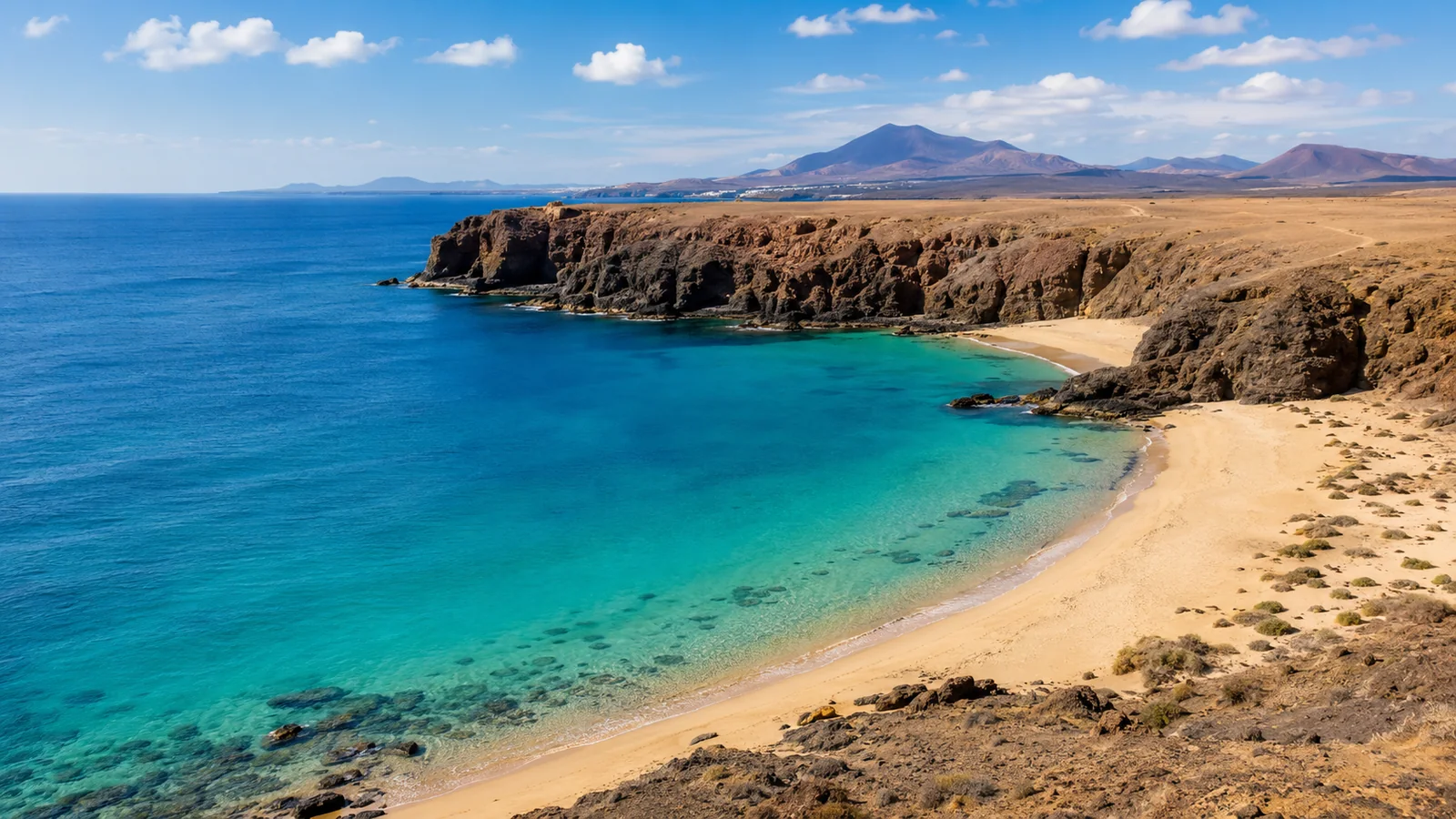
Playas de Papagayo is the name most visitors use for the beautiful chain of coves at the southern tip of Lanzarote. Inside the protected landscape of Los Ajaches, the coast breaks into small golden beaches, low volcanic cliffs and exceptionally clear Atlantic water. The best-known cove, Playa de Papagayo itself, is a classic Lanzarote view: sheltered turquoise water below a dark rocky headland, with the outline of Fuerteventura often visible on the horizon.
It is an easy place to fall in love with, but it rewards planning. The access road is unpaved, the sun is strong, and the beaches are protected natural spaces rather than a conventional resort promenade. Arrive prepared and Papagayo becomes one of those island days you remember: a swim, a clifftop walk and the feeling of being close to the landscape.
What makes Papagayo special
The Papagayo beaches sit within the Monumento Natural de Los Ajaches, an area of old volcanic terrain in the municipality of Yaiza. This is important because the setting is part of the experience. There are no large hotel blocks immediately behind the sand; instead, there are rust-coloured slopes, basalt ledges and paths between coves. The water often appears intensely blue or green where sunlight reaches the sandy seabed, while the surrounding rock gives every beach a slightly different character.
Playa de Papagayo is the most photographed bay, but it is only one stop in a small coastal collection. Playa Mujeres is broader and more open, while Playa del Pozo, Caleta del Congrio and Puerto Muelas offer other places to settle depending on the wind and how much walking you fancy. In calm conditions, the coves are excellent for a gentle swim and for snorkelling close to the rocks. Conditions can change, however, so always read the sea before entering and choose the beach that feels most protected on the day.
A short history of the landscape
Lanzarote’s southern coast was shaped by volcanic activity, wind and the Atlantic over a very long period. Los Ajaches is among the island’s older geological areas, and its eroded slopes look different from the younger black lava fields around Timanfaya. The contrast between warm-coloured earth, pale sand and clear water is one reason Papagayo feels so distinctive. The cliffs are not merely a scenic backdrop: they are a record of the island’s changing volcanic landscape.
The coast has also long been connected with fishing, small-scale coastal life and the practical need to find shelter from the trade winds. Today Papagayo is one of Lanzarote’s most popular natural attractions, but the protected designation helps preserve the beaches’ relatively undeveloped appearance. Treating the area with care matters. Take rubbish with you, stay on established paths and avoid climbing or dislodging the cliff edges; the simple habits make a genuine difference in a fragile coastal environment.
How to get to Playas de Papagayo
The beaches are a short drive from Playa Blanca, which makes them very easy to include in a south-Lanzarote itinerary. A hire car gives you the most flexibility, especially if you want to carry water, towels, shade and snorkelling equipment. Follow signs for the Papagayo beaches or use Google Maps for Playas de Papagayo. The final approach uses a dirt road. It is normally manageable with a standard rental car if driven slowly and carefully, but it can feel bumpy and dusty, so check the conditions and your rental agreement before setting off.
There is a controlled entrance to the protected area and a vehicle access charge may apply. The arrangements, opening times and payment method can change, so confirm the current information locally before you go. Once inside, follow the signs to the different beaches and park only in the designated spaces. Do not be tempted to create your own shortcut across the ground or stop on narrow tracks: it damages the landscape and can make access difficult for other visitors.
If you are staying in Playa Blanca, walking is another appealing option for confident walkers. A coastal route links the resort area with the Papagayo zone, although it is exposed and should not be underestimated in the midday heat. Taxis or organised boat excursions can also work well, particularly if you prefer to see the coastline from the water. A boat trip may visit a nearby bay rather than every beach, so check the exact itinerary before booking.
Choosing the right beach and reading the conditions
There is no single “best” Papagayo beach for everyone. Playa de Papagayo is the iconic choice and is usually the first recommendation for its natural amphitheatre and inviting water. It can also be the busiest. Playa Mujeres has more space and can be a good choice if your group wants room to spread out. Caleta del Congrio is attractive for visitors happy to walk a little farther, while the smaller coves can feel quieter when conditions allow.
Wind direction and sea state should guide your decision more than a checklist. Lanzarote is wonderfully sunny but breezy, and a beach that looks sheltered on a map may feel very different on the day. Look for the most protected bay, watch the water for a few minutes and take notice of any flags or safety notices. Never rely on a photo taken in perfect weather. If the sea is choppy, enjoy the view from the sand and save snorkelling for another day.
Swimming, snorkelling and time on the water
On a calm day, Papagayo is one of the island’s loveliest places for a simple swim. Enter slowly, especially where the shore is rocky, and keep an eye on children at all times. The coves may look calm but the Atlantic deserves respect. Avoid swimming alone or far from shore, do not dive from cliffs, and leave the water if the conditions become uncomfortable. There are not the same services or supervision you would expect at a town beach.
A mask and snorkel can turn an ordinary beach stop into a small adventure. The rocky sides of the coves offer more marine life than the middle of the sandy bay, but stay clear of surge zones and avoid touching plants, animals or rocks. Water shoes can be useful for uneven entries. If you are bringing a paddleboard or kayak, check the wind forecast first; strong wind can make an easy-looking distance unexpectedly difficult.
Facilities, food and what to pack
Part of Papagayo’s charm is that it remains relatively simple. Facilities are limited compared with Playa Blanca, so come self-sufficient. Take more drinking water than you think you will need, especially in summer, along with sunscreen, a hat, a light cover-up and something to create shade. The sun reflects strongly from both sand and water. A reusable bag for rubbish is essential, and it is wise to pack snacks if you plan to stay for several hours.
There is a well-known beachside restaurant in the Papagayo area, but availability and opening arrangements can vary. Treat it as a welcome possibility rather than your only plan. Booking ahead can be sensible in busy periods, and bringing your own picnic gives you freedom to choose a quieter cove. Please do not leave food scraps behind: gulls and other animals should not become dependent on visitors.
Best time to visit
Morning is usually the sweetest time at Playas de Papagayo. The light is soft, parking is easier and you can choose your spot before the beaches become busy. Late afternoon is also wonderful for a walk and photographs, although do not stay so long that you are navigating the dirt road after dark. In summer, an early arrival helps you avoid the strongest sun. In winter, the water can still be inviting on a warm day, but wind may play a bigger role in your plans.
For a balanced day, arrive with a plan to visit two beaches rather than rushing through every cove. Start at Playa de Papagayo for the classic view, then walk towards a quieter bay when you want a change of scene. Keep the pace gentle. Papagayo is not about ticking boxes; it is about enjoying the colours, the sound of the water and the unusual calm of Lanzarote’s southern edge.
Pair Papagayo with nearby places
After the beach, Playa Blanca is an easy place for dinner, a harbour walk or an evening drink. The Marina Rubicón area offers shops and restaurants, while the old lighthouse at Punta de Pechiguera makes a pleasant sunset detour if you still have energy. If you are exploring by car, the dramatic salt pans at Janubio and the volcanic landscapes around El Golfo are also reachable on a longer south-and-west route.
Playas de Papagayo captures an important part of Lanzarote’s personality: beautiful, bright and raw without needing much embellishment. Bring water, respect the landscape, choose the cove that suits the day and give yourself enough time to slow down. That is the simplest way to enjoy one of the island’s most memorable beaches.