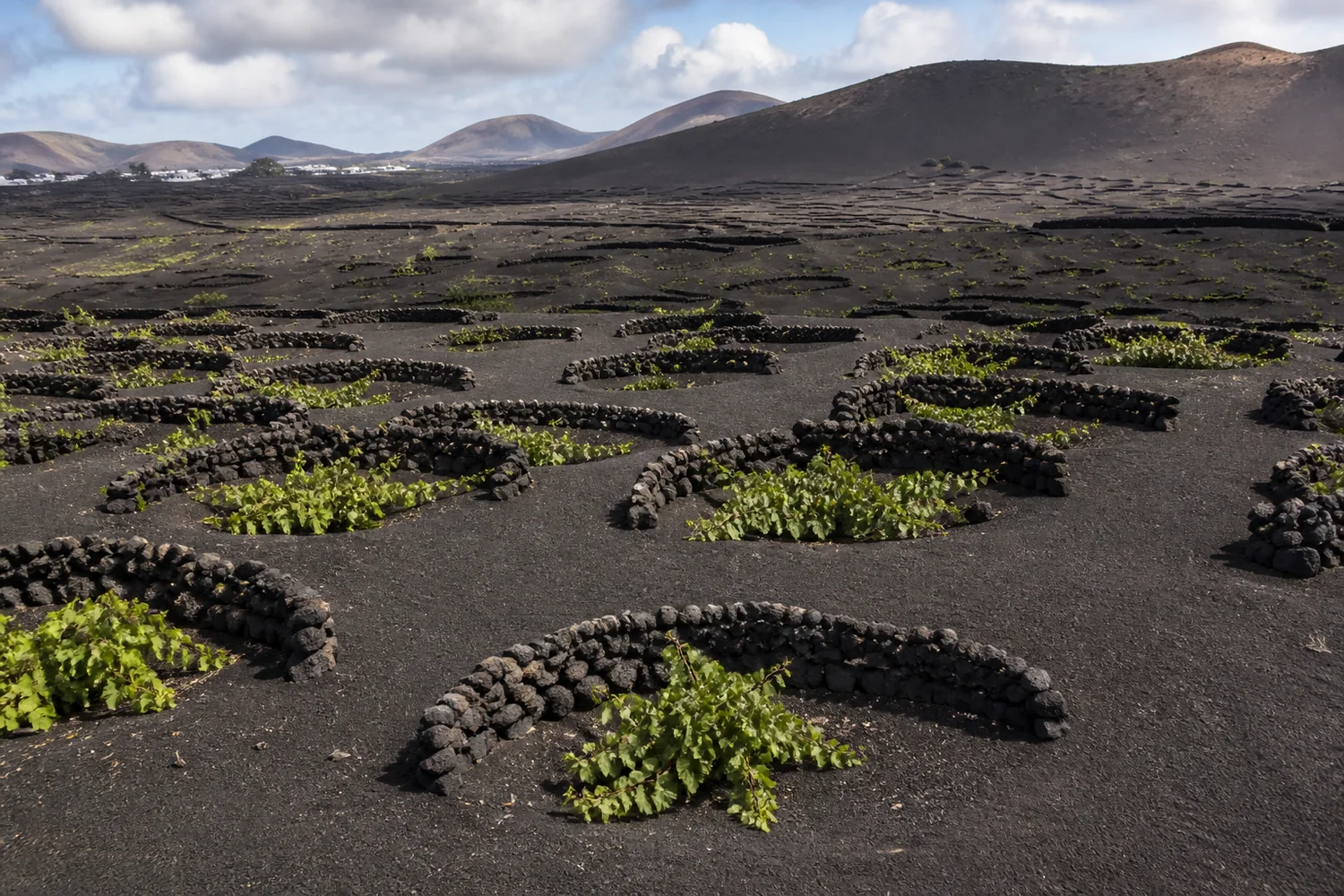
La Geria is Lanzarote’s wine country, but it does not look like any vineyard region most travellers have seen before. Between volcanic cones and dark slopes, individual vines grow in deep circular hollows of black ash, each protected from the wind by a low semicircular wall of lava stone. The landscape is extraordinary: thousands of green plants scattered across charcoal-coloured ground, with white wineries and distant volcanoes completing the scene.
This is one of the clearest examples of Lanzarote’s ingenuity. After the great eruptions of the eighteenth century covered huge areas with volcanic material, local farmers developed a way to cultivate grapes in conditions that seemed almost impossible. Today, La Geria is a protected landscape, an important wine-growing area and one of the island’s most rewarding routes for a slow drive, a winery visit or a tasting of volcanic Malvasía.
Why the vineyards look so different
The dramatic eruptions of 1730–1736 transformed central and southern Lanzarote. Lava and volcanic ash, locally known as rofe or lapilli, covered fertile ground. Rather than abandon the land, farmers learned that the porous ash could capture night moisture and reduce evaporation. They dug through it to reach the soil below, planted one vine in each hollow and surrounded it with a small dry-stone wall called a zoco. The wall helps protect the vine from the persistent trade winds.
That system is labour-intensive and visually unforgettable. From the road, the hollows appear like a vast pattern of dark circles. Up close, you can see the care involved in every plant, every wall and every path. The vines do not sit in neat, flat rows. They occupy the landscape as a response to it, which is exactly why La Geria has become an icon of Lanzarote and a powerful example of farming adapted to a difficult climate.
What wine is produced in La Geria?
La Geria is especially known for wines made from volcanic Malvasía, a grape that produces aromatic whites with freshness and character. You will also find dry whites, semi-sweet styles, rosés and reds made from other local varieties, depending on the winery. The volcanic soil, scarce rainfall, wind protection and maritime influence all contribute to the distinctive profile of Lanzarote wines. The best way to understand that claim is simple: sit down for a tasting and compare a few styles.
You do not need to be a wine expert to enjoy the experience. Ask the person serving you to explain which grapes are in the glass, whether the wine is dry or fruity, and what local food they would pair with it. A small tasting can become a relaxed introduction to the island’s agriculture, especially when it is accompanied by cheese, bread or a view of the vines. If you are driving, appoint a non-drinking driver or use a tour; this should be a pleasure, never a risk.
How to get to La Geria
La Geria is spread along the central LZ-30 road between the areas of Uga, Masdache, San Bartolomé and the eastern edge of Timanfaya. It is easiest to explore by rental car. Use Google Maps for La Geria for a starting point, then let the road and marked wineries guide you. The drive is itself the attraction, so leave time for safe stops at viewpoints and do not try to race through it between other commitments.
From Puerto del Carmen, Costa Teguise or Playa Blanca, La Geria is a straightforward half-day outing. It fits naturally with Timanfaya National Park, but do not make the common mistake of trying to pack every south-island attraction into a few rushed hours. The pleasure of La Geria comes from moving slowly: pausing at a viewpoint, visiting one or two wineries and noticing how the landscape changes with light and cloud.
Choosing a winery visit
Several wineries welcome visitors in and around La Geria, from historic family producers to larger, more established names. Bodega La Geria, for example, offers guided tours and tastings, while other wineries may have museums, vineyard walks, shops or more intimate appointments. The choice depends on whether you want a quick tasting, a deeper explanation of cultivation, a food pairing or simply a bottle to take home.
Opening times, languages, tasting menus and booking requirements vary greatly, so check the individual winery’s website before travelling. Lanzarote’s official tourism guidance recommends confirming each establishment’s schedule, and it is wise to book ahead for English-language tours, special tastings or visits in high season. Do not assume every vineyard is open for a walk-in visit. A little planning turns a pleasant roadside stop into a genuinely personal experience.
A responsible tasting day
Wine tourism is at its best when it supports the people who preserve the landscape. Buy directly from the winery if you find a bottle you love, listen to the staff who explain the work behind it and remember that these vines are agricultural livelihoods, not a photo backdrop. Stay on public paths or the route offered by the winery. Do not step into the hollows, climb the stone walls or touch vines; the ground and structures are both fragile.
If everyone in your group would like to taste, book a guided tour with transport or arrange taxis rather than driving after drinking. The LZ-30 is scenic, but it is a real road with bends, cyclists and local traffic. Keep tastings modest and enjoy the food, conversation and views. La Geria is much more satisfying as a relaxed half-day than as a checklist of glasses to finish.
Walking, viewpoints and photography
Even if you do not visit a winery, the La Geria landscape is worth seeing. There are marked walking routes and viewpoints, but you should choose official or clearly established paths. The volcanic ground can be loose, and the vineyards are private working land. Wear closed shoes, carry water and do not wander through planting areas just to recreate a photo you have seen online.
For photography, early morning and late afternoon are especially kind to the landscape. Low light creates shadow inside the vine hollows and brings out the texture of the rofe. A cloudy day can be excellent too, because the green vines stand out against the black ground. From the roadside, use designated pull-offs and never stop abruptly on a bend. The most memorable pictures usually come after you have taken a moment to look, rather than from rushing out of the car.
Best time to visit La Geria
La Geria is beautiful throughout the year. Spring and early summer often offer particularly fresh green vines against dark ash, while late summer brings the grape harvest and a stronger sense of activity at wineries. The harvest date can vary with the season and weather, so do not plan around an exact week unless you have confirmed an event directly with a producer. Autumn light is warm and gentle; winter can bring clear views and fewer visitors.
Midday can be hot and bright, especially in summer. A morning tasting or a late-afternoon drive is usually more comfortable. Wind is common and can make exposed viewpoints feel cooler than expected, so carry a light layer even when the forecast looks sunny. The landscape remains open and exposed: sun protection, water and sensible footwear are always useful.
What to bring and practical tips
Take water, sun protection, a hat, sunglasses and shoes suitable for uneven volcanic paths. Keep a light jacket in the car for the breeze. Bring a small bag if you plan to buy bottles, but check your airline baggage rules if you are flying soon afterwards. Most wineries can advise about shipping or packaging, although services and availability differ.
The scenic route itself is free to enjoy. Costs depend on the tasting, tour or food experience you choose. Set a comfortable budget, reserve anything special in advance and ask about what is included. A simple tasting can be ideal if your time is limited; a guided vineyard and winery visit is worthwhile when you want to understand the cultivation system in more detail.
Combine La Geria with nearby places
Timanfaya National Park lies close to the west, making La Geria a natural cultural and culinary contrast after the fire mountains. The Fundación César Manrique in Tahíche and the old town of Teguise are good additions for visitors interested in architecture and local history. From the south, pair the vineyards with Uga, Yaiza or the coast around El Golfo and Janubio. Just leave enough time for the road and avoid overloading the day.
La Geria is proof that beauty can grow from adaptation. What began as a response to volcanic devastation became one of the world’s most distinctive vineyard landscapes. Drive carefully, taste thoughtfully and look beyond the photographs. In every hollow vine and stone wall, you can see the patience and imagination that make Lanzarote so unlike anywhere else.