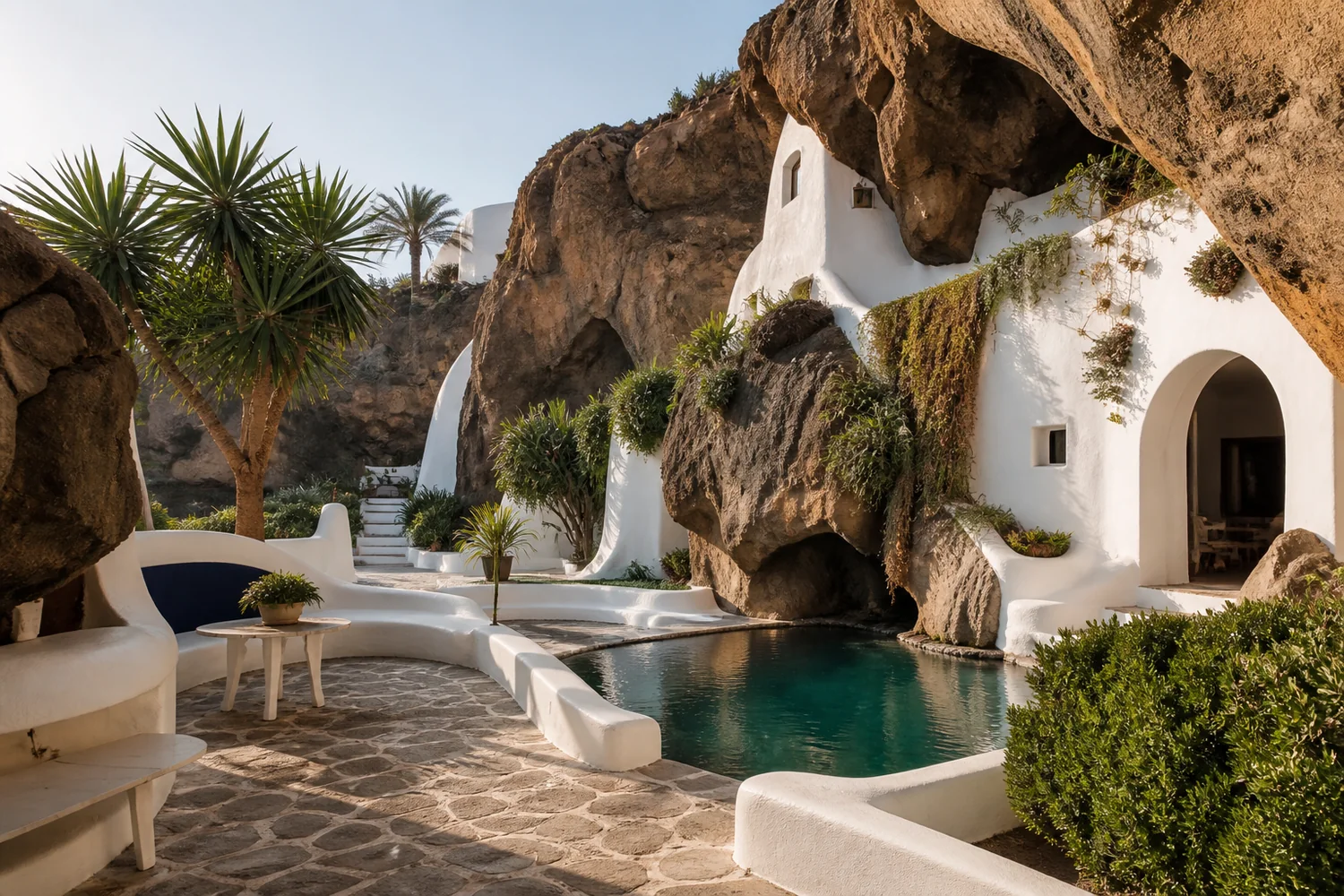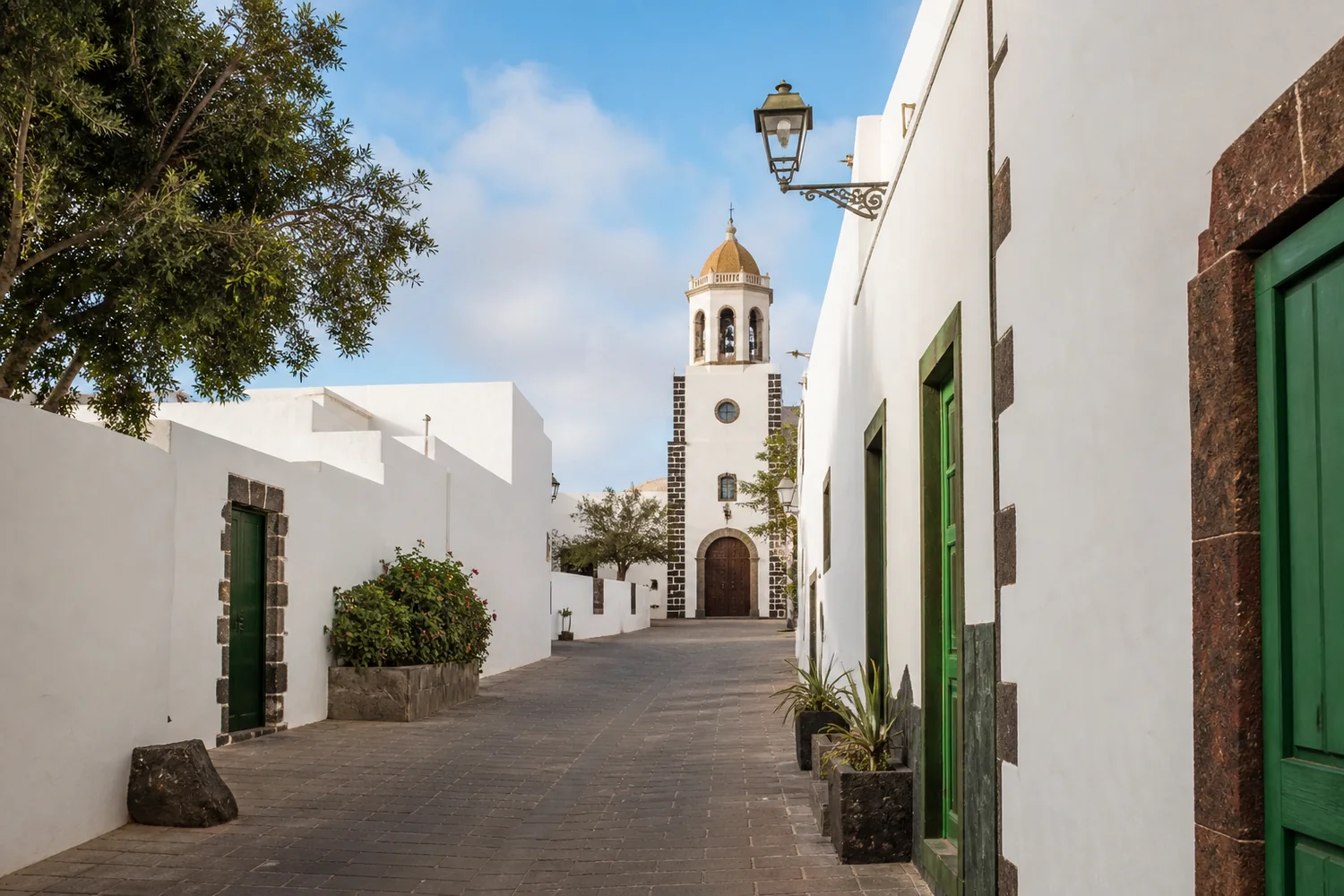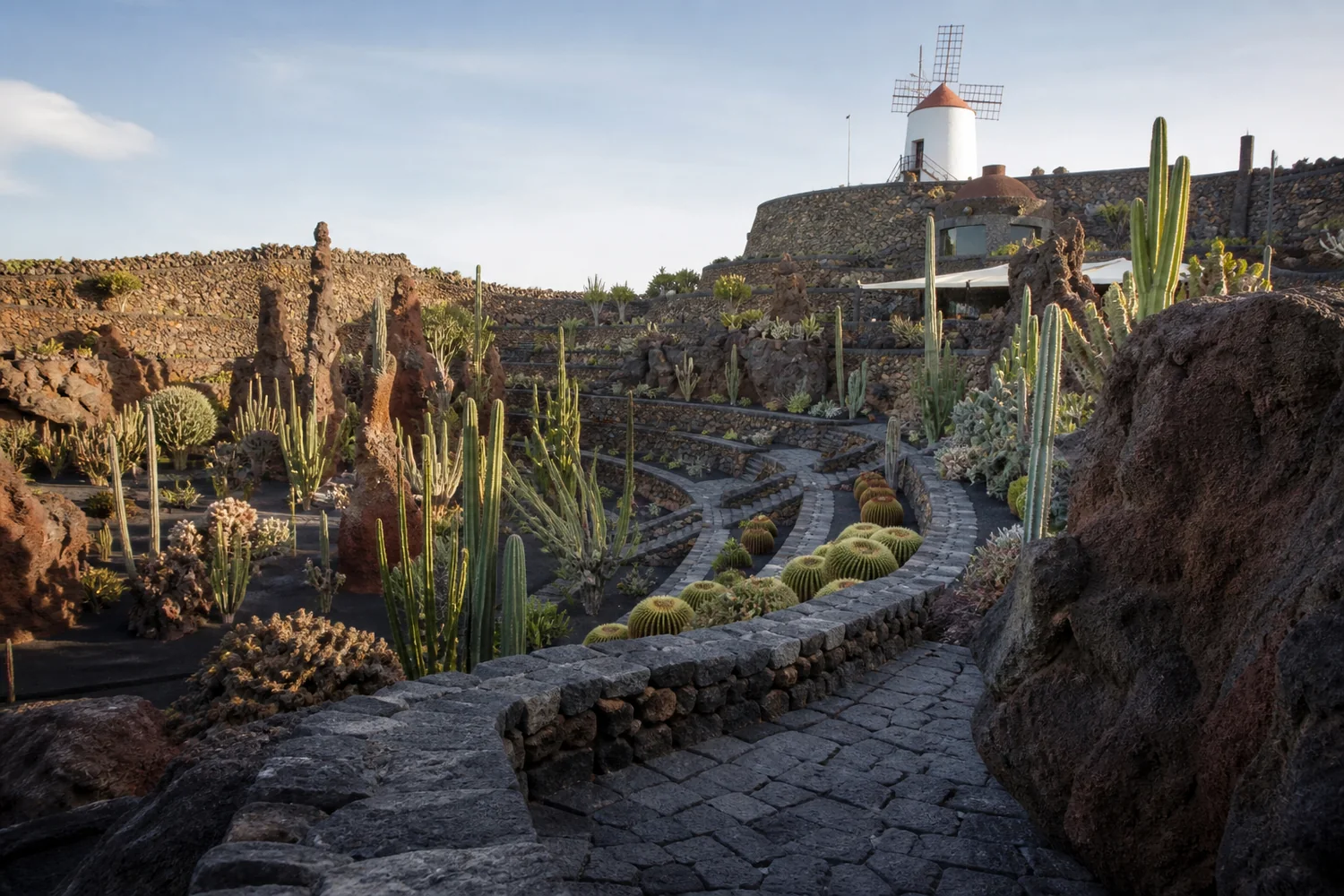
Jardín de Cactus is one of Lanzarote’s most elegant surprises. In the village of Guatiza, César Manrique transformed an old volcanic-material quarry into a terraced garden filled with cacti from around the world. Dark basalt walls, whitewashed details, a windmill and thousands of sculptural plants create a space that feels both designed and completely at home in the island’s dry volcanic landscape. It is a compact visit, but one with a remarkable amount to see.
The garden is ideal for visitors who enjoy photography, design, botany or simply an hour away from the beach. It also works particularly well for families: the paths, pond, changing shapes and unusual plants keep the experience visually interesting without requiring a long walk. Come slowly, look closely and you will begin to notice the incredible variety in texture, size, colour and form.
From quarry to garden
Before it became a visitor centre, this was a rofera, a quarry where volcanic material was extracted. The stepped shape of the excavation remains central to the design. Rather than hide its industrial past, the garden uses the terraced walls as a natural setting for planting. This is a familiar César Manrique idea: take a difficult or damaged landscape and give it a new purpose without denying what was there before.
The garden opened in 1990 and was one of Manrique’s final major projects. His signature is visible everywhere: the dialogue between black lava and white surfaces, the playful use of small details, the emphasis on paths and viewpoints, and the decision to make the surrounding landscape part of the experience. The traditional windmill at the top is more than a pretty landmark. It links the site with Lanzarote’s agricultural history and offers a wonderful view across the terraces.
Cacti from five continents
CACT describes the garden as home to nearly 500 species, with plants from five continents. You do not need to know their Latin names to be fascinated. Some cacti stand like columns, others are round and densely spined, while others spread in pads, ribbons or improbable spirals. The paths encourage you to look from above, below and across the planting beds, so the garden changes constantly as you move through it.
The plants are a gentle lesson in adaptation. Cacti have evolved striking ways to cope with heat, limited water and intense sun, which makes them feel especially fitting on Lanzarote. Many forms that might look alien in a temperate garden sit naturally against the lava stone here. Keep to the paths, avoid touching spines or leaning over beds, and explain to children that even a small broken piece can harm a carefully tended plant.
Prickly pears, cochineal and Guatiza’s history
The garden is not only about exotic cacti. The surrounding area has a deep connection with prickly pear cacti, locally called tuneras, and with cochineal production. Cochineal is a tiny insect that lives on prickly pears and was historically valued as a source of red dye. In the nineteenth century it became an important economic activity for Lanzarote. The relationship between cactus, agriculture and trade adds a human story to what might otherwise seem like a purely decorative visit.
Look beyond the garden walls as you approach or leave Guatiza and you may notice traces of this cultivated landscape. The dry climate that makes cactus gardens possible also shaped the island’s farming ingenuity. Pairing the Jardín de Cactus with La Geria later in your trip is a lovely way to see two very different examples of how Lanzarote people have learned to work with wind, ash and scarce water.
How to get to Jardín de Cactus
The garden is in Guatiza, on the north-east of Lanzarote, within the municipality of Teguise. It is easy to reach by rental car from Costa Teguise, Arrecife, Puerto del Carmen or the northern villages. Use Google Maps for Jardín de Cactus and follow the directions to Avenida Garafía. Parking is available nearby, and the site makes a straightforward stop on a drive between Costa Teguise, Arrieta, Jameos del Agua and Mirador del Río.
There is no difficult hike or remote access road. This makes the garden particularly convenient on a hot or windy day, or when you want a cultural stop between longer outdoor activities. Buses and tours may include Guatiza, but a car gives you the easiest freedom to combine it with the old town of Teguise or the coast. Arrive a little before lunch if you would like time for the garden and café without rushing.
Tickets, opening times and how long to allow
The Jardín de Cactus is managed by Lanzarote’s Centres of Art, Culture and Tourism (CACT). The official page currently lists daily opening from 10:00 to 17:00, last admission at 16:30, an approximate visit time of 60 minutes and a standard ticket price of €9. Children aged 0–6 are currently admitted free, and other reduced rates may be available. Prices, schedules and admission arrangements can change, so check the official CACT Jardín de Cactus page before setting out.
For a general visit, CACT says that a fixed time reservation is not necessary, although buying ahead can reduce waiting. Download any QR ticket before travelling because mobile coverage can vary. An hour is enough for most people, but allow longer if you enjoy photography, want to read labels carefully or plan to eat at the café. The garden also offers a separately booked brunch experience; it requires garden admission as well, so confirm the current terms before booking.
What to see inside
Start by taking in the overall terraced view from the entrance, then work your way gradually through the paths. The pond, stonework and planting composition are as important as any single specimen. Seek out the windmill at the top, but be prepared for steps and uneven surfaces. The garden is compact enough that it is easy to retrace your route and return to a plant or viewpoint you particularly liked.
The café and restaurant offer a pleasant pause, with views across the garden. CACT notes that food and drink from outside may not be brought into the centre, so plan accordingly. The menu makes use of local ingredients and may include cactus-related products such as prickly pear, but availability changes. The shop is another enjoyable stop for local and artisan items, gardening inspiration and gifts that are more useful than a generic souvenir.
Photography, family visits and accessibility
Photography is allowed during the visit, and the entrance view of the terraces is a natural first shot. The best images usually come from patience: wait for a gap in the path, use the dark lava as a background and notice the patterns formed by repeated spines and stems. Avoid stepping into planting beds or blocking narrow paths. Early morning often feels calmer, while the late-afternoon sun gives the stone and cacti warmer colour.
Families generally find the garden easy to enjoy. Give children small things to look for: the tallest cactus, the roundest one, the windmill, the pond or a surprising flower. Still, keep them close around steps, water and spiny plants. CACT advises that part of the site is adapted for visitors with reduced mobility, but uneven stone paths remain and the mill and shop have no ramp access. Contact the centre directly if a specific accessibility need will affect your route.
What to bring and the best time to visit
Wear comfortable shoes with grip, bring water and apply sun protection. Although the garden is not a long walk, it is mostly outdoors and the bright light reflects from stone and pale surfaces. A hat and sunglasses are sensible, especially in summer. A light layer can help on windier days, but there is plenty of warmth and shelter among the terraces.
Mornings are ideal for a calm visit and bright photographs. The garden can also be a satisfying early-afternoon stop before continuing north or inland. It is open year-round, and the plants remain interesting in every season. If the weather turns breezy at the coast, the protected quarry setting often feels more comfortable than an exposed beach.
Combine the garden with nearby Lanzarote
Jardín de Cactus pairs naturally with a northern route. Continue to Arrieta for a sea-view lunch, visit Jameos del Agua and Cueva de los Verdes, or drive through Haría towards Mirador del Río. For a cultural day, combine it with the old town of Teguise and its traditional streets. For a stronger contrast, follow up with the broad beach and cliffs at Famara.
This is a small place with a big visual impact. Jardín de Cactus captures a lot of what makes Lanzarote special: volcanic landscape, agricultural memory, imaginative design and the ability to find beauty in dry conditions. Give it an unhurried hour, stay on the paths and let the forms of the plants do the talking.